
Waking up with a red, sticky eye can be alarming. Is it an infection? Is it contagious? Often, patients confuse a flare-up of blepharitis with "Pink Eye" (Conjunctivitis). Differentiating them is vital because antibiotics for pink eye won't fix chronic blepharitis.
1. The Duration (Time is Key)
The biggest clue is how long it lasts.
- Pink Eye (Conjunctivitis): Usually Acute. It comes on suddenly, gets worse over a few days, and typically resolves (with or without treatment) in 1-2 weeks.
- Blepharitis: Usually Chronic. You have probably had low-grade symptoms for months or years, with periods where it gets slightly better or worse. It rarely "just goes away" on its own.
2. The Discharge
What is coming out of your eye?
Pink Eye
- Viral: Watery, tearing discharge. Often starts in one eye and spreads to the other.
- Bacterial: Thick, yellow-green pus (mucopurulent). The eye is "glued shut" with goop in the morning.
Blepharitis
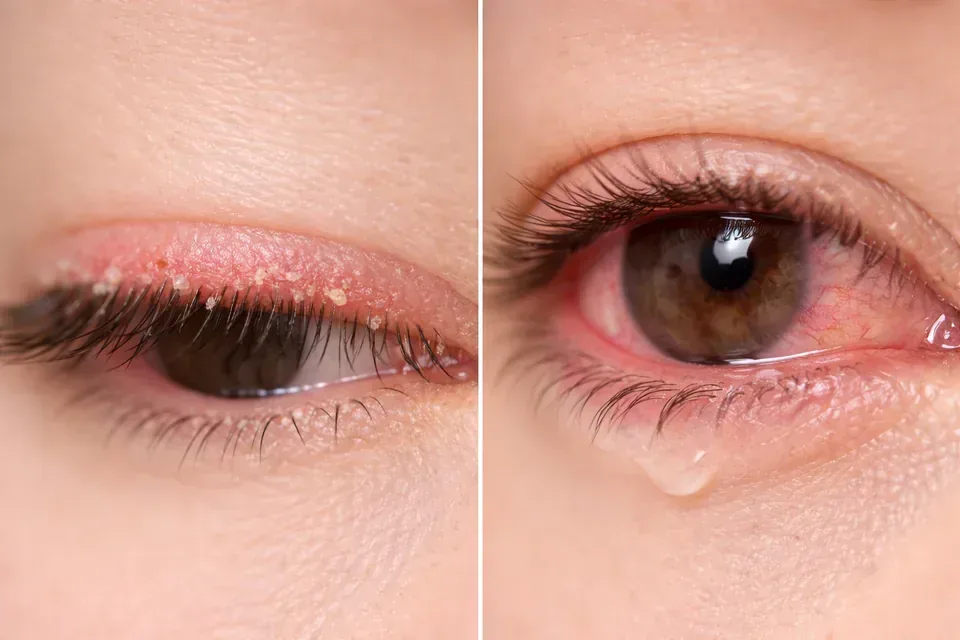
- Crusts/Flakes: Hard, dry crusts "like cornflakes" or dandruff at the base of the lashes.
- Foam: White frothy tears in the corner of the eye (caused by soap-like reactions from bacteria).
- It is rarely "goopy" in the same way an active infection is.
3. The Location of Redness
Look closely in the mirror.
- Pink Eye: The white of the eye (sclera) is bright pink or red. The inner eyelids are very red.
- Blepharitis: The eyelid margins (the rim where lashes grow) are red, thickened, and swollen. The white of the eye might be slightly red, but the "action" is on the eyelid rim.
4. Is it Contagious?
Pink Eye (Viral/Bacterial): Highly contagious. It spreads through towels, pillowcases, and hand-to-eye contact.
Blepharitis: Not contagious. You cannot catch blepharitis from someone else, and you cannot give it to your family. It is caused by your own normal bacteria or skin type.
Summary Table
| Feature | Blepharitis | Pink Eye (Infective) |
|---|---|---|
| Duration | Chronic (Months/Years) | Acute (Days/Weeks) |
| Main Symptom | Itching, Grittiness, Dryness | Discharge, Matting, Tearing |
| Lashes | Crusty, Dandruff | Matted with Pus |
| Contagious? | No | Yes |
FAQs
Is pink eye contagious?
Viral and bacterial conjunctivitis are contagious, while blepharitis is not.
Can blepharitis look like conjunctivitis?
Yes. Both can cause red, irritated eyes, but blepharitis centers on the lid margins and lash debris.
Do I need antibiotics for blepharitis?
Not always. Many cases improve with lid hygiene; antibiotics are reserved for selected cases.
When should I seek urgent care for red eyes?
If you have severe pain, marked light sensitivity, or vision changes, seek urgent assessment.