
Blepharitis often needs ongoing care. Many people find a consistent routine helps reduce symptoms and flares. Since the condition is chronic, there is no permanent "cure," but a consistent lid-hygiene routine is often recommended first-line and can meaningfully reduce symptoms for many people. Results vary depending on severity and contributors (MGD, Demodex, rosacea, eczema), and flares can still occur.
Explore this topic: Visit the Daily blepharitis care hub for linked routines and self-care guidance.
"The goal isn't just to clean the eye, but to restart the natural oil production that keeps tears stable. Routine is your best treatment."
The 3-step routine
- Warm: Melt the thickened oils.
- Massage: Express the glands.
- Cleanse: Clear the debris.
Step 1: Warm Compresses
The goal of heating is to melt the hardened meibum (oil) inside the glands of your eyelids. The melting point of meibum in MGD patients is higher than normal body temperature, often requiring sustained warmth to liquefy.

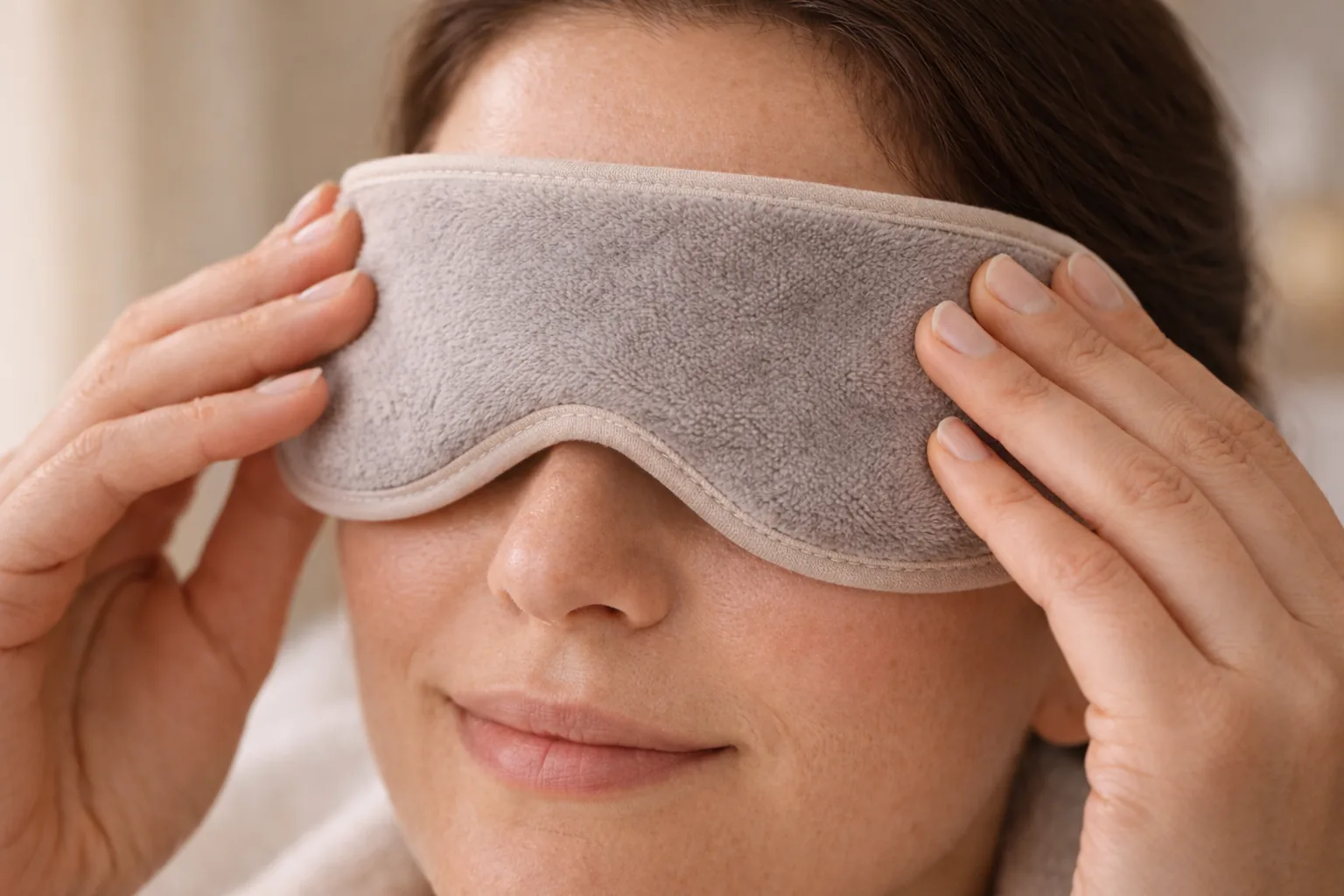
Patient applying a heated eye mask safely.
- Duration: Apply heat for at least 5 to 10 minutes.
- Temperature: Aim for comfortably warm compresses (often around 40-45 C if using a heated mask) that do not burn. Follow manufacturer instructions and test temperature before applying.
- Method:
- Good: A warm wet flannel. Note: This cools down quickly and requires frequent reheating to maintain the therapeutic temperature.
- Common option: Microwaveable heat masks are a common, convenient option; any method that delivers comfortable warmth safely and consistently is acceptable.
Best heated eye mask for blepharitis UK: what to look for
If you are choosing a heated eye mask in the UK, focus on safety and consistent warmth rather than brand claims.
- Consistent heat: Stays warm for 5 to 10 minutes without overheating.
- Fit: Adjustable strap so the mask sits flush on the lids.
- Washable cover: Helps keep the mask hygienic.
- Safety guidance: Clear microwave instructions and a heat-check step.
- Regulatory marks: Look for UKCA/CE compliance where applicable.
Step 2: Lid Massage
Once the oils are melted, mechanical force is needed to express them out of the glands and into the tear film. Massage can help express meibum; evidence on optimal technique varies, so keep pressure gentle and follow clinician advice.
Technique: Using a clean finger or a cotton bud, gently roll down towards the lash line on the upper lid, and roll up towards the lash line on the lower lid. Do this across the entire width of the eyelid. This mimics the natural blinking action but with more intentional pressure.
Safety Caution: If you have high myopia (very short-sighted) or glaucoma, consult your eye doctor before performing vigorous eye massage, as excessive pressure on the globe can be harmful.
Blepharitis eye cleaning (Step 3: Lid Hygiene)
The final step removes the expressed oily debris, bacteria, and crusts from the eyelid margins. This prevents the debris from causing further inflammation. A gentle eye wash for blepharitis can be part of this step if it is designed for lid margins.
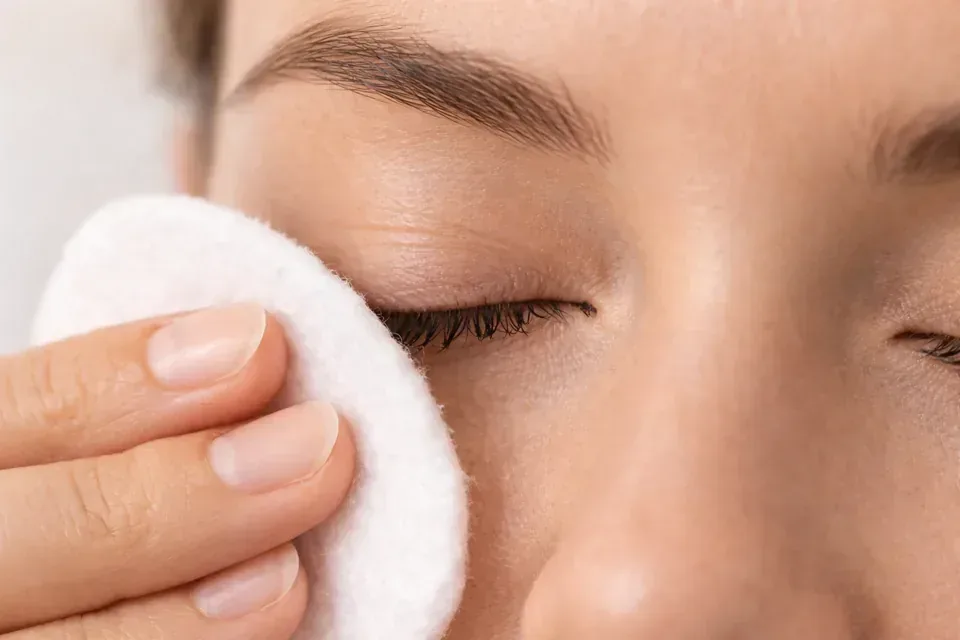
Close-up of proper lid scrub technique along the lash line.
- Commercial Lid Wipes: Some lid cleansers with tea tree oil or terpinen-4-ol may help Demodex-related debris; choose eye-safe products and stop if stinging.
- Baby Shampoo: Historically recommended (diluted 1:10 with water), but modern research suggests it may affect the tear film stability negatively in some patients. Dedicated lid cleansers are generally preferred today.
Gently scrub the base of the eyelashes (where the lashes meet the skin) with the wipe or solution for 15-30 seconds per eye. Rinse with cool water afterward if using a soap-based cleanser.
Frequency
During an active flare-up, perform this routine twice daily (morning and evening). Once symptoms are under control (maintenance phase), once daily is usually sufficient to prevent recurrence.
Explore next
Related content
Continue with related guides that build on this topic and keep your care plan consistent.