
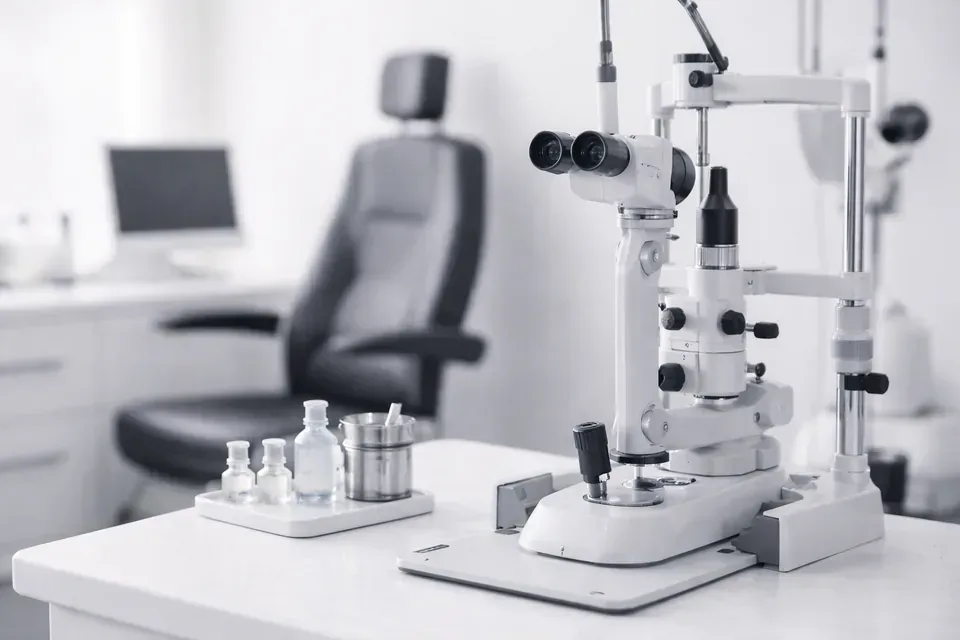
Blepharitis is a long-term condition, so blepharitis NHS treatment focuses on daily routines that keep symptoms controlled. Most people improve with consistent lid hygiene, but some need prescription treatments or specialist input, especially if the cornea becomes inflamed.
Blepharitis treatment NHS: first-line daily lid hygiene
The NHS recommends a simple, repeatable routine: warm compress, gentle massage, and lid cleaning. This helps loosen debris, improve meibomian gland flow, and reduce bacterial load. It is safe to start before any appointment.
Over-the-counter support
- Preservative-free lubricants: Reduce burning and dryness, especially with screen use.
- Lid wipes or foam cleansers: Helpful for removing scurf and collarettes.
- Warm eye masks: A consistent heat source is easier to maintain than a flannel.
Treatment for blepharitis NHS: when GP or optometrist adds prescriptions
If symptoms persist, your clinician may prescribe targeted treatments. Options depend on the type of blepharitis and associated conditions such as rosacea.
- Antibiotic ointment: Used for anterior blepharitis with bacterial overgrowth.
- Short steroid course: Used for flare-ups with marked inflammation, under supervision.
- Oral antibiotics: Sometimes prescribed for MGD or rosacea-related disease.
Referral to NHS ophthalmology
Referral is considered if there is corneal involvement, recurrent chalazia, or significant impact on vision. Specialist clinics can assess gland function, confirm the diagnosis, and tailor treatment plans.
What the NHS may not routinely provide
Device-based treatments such as IPL, thermal pulsation, or BlephEx are often provided privately and may not be available in all NHS regions. Some hospitals offer these in specialist settings, but access varies widely.
| Stage | Typical NHS approach |
|---|---|
| Initial care | Daily lid hygiene, lubricants, lifestyle adjustments |
| Persistent symptoms | Prescription ointments or drops, review of compliance |
| Complications | Ophthalmology referral, tailored treatment plan |
Key takeaway
The NHS pathway is steady and stepwise. Consistent home care is the backbone, while prescriptions and specialist treatments are added when necessary. If your symptoms do not improve after several weeks of good hygiene, book a review.
Related content
FAQs
What does blepharitis NHS treatment usually include?
NHS blepharitis treatment typically starts with daily lid hygiene and lubricants, then adds prescriptions or referral if symptoms persist.
Do I need a GP referral for blepharitis?
Not always. Many patients start with an optometrist, but GP referral may be needed for prescription treatments or specialist review.
Will the NHS provide IPL or BlephEx?
These device-based treatments are often private and availability varies by region. Ask your local NHS provider.
How long does blepharitis treatment NHS care take to work?
Lid hygiene can take several weeks to show steady improvement. Persistence is essential.