

One of the most common misconceptions about blepharitis is that it results from being unclean. This is often not accurate. Blepharitis is usually multifactorial and not simply "poor hygiene." It is a complex inflammatory condition often linked to your skin type, the natural bacteria living on your body, and your environment.
"Understanding the root cause is the first step to tailoring a treatment plan that is more likely to help, based on the suspected cause(s) and response over time, rather than just treating the symptoms."
The Bacterial Overload
Everyone has bacteria on their skin. However, people with blepharitis often have an overgrowth of Staphylococcus bacteria near the base of the eyelashes.
These bacteria produce exotoxins that irritate the eyelid surface. Over time, your immune system reacts to these toxins, causing the redness, swelling, and crusting characteristic of the condition. It is an inflammatory cycle: the bacteria irritate the eye, the eye gets inflamed, and the inflammation creates a better environment for bacteria to thrive.
The Demodex Mite Factor
Demodex mites are microscopic parasites that live in hair follicles and oil glands. They are a normal part of the human microbiome. Demodex are common and increase with age; presence alone does not equal disease.
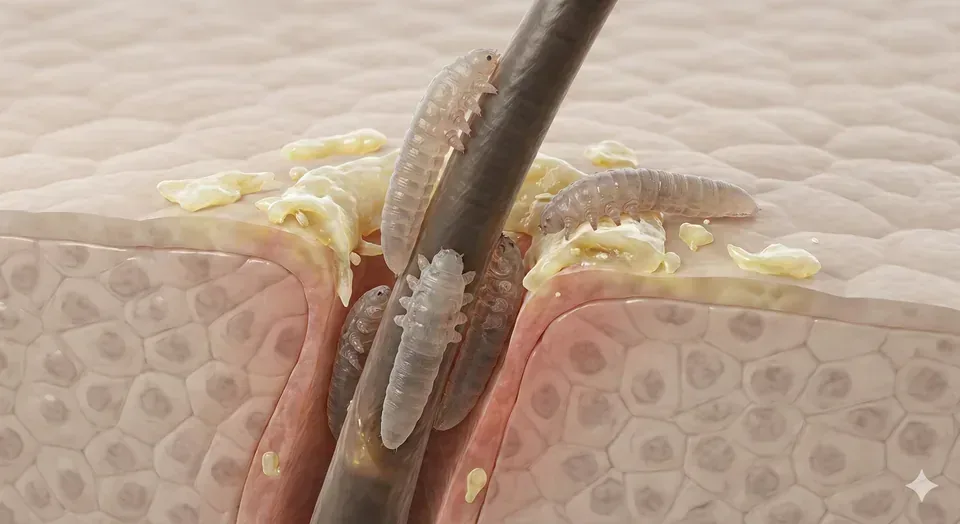
Demodex mites inhabiting an eyelash follicle.
In some individuals, the population of these mites explodes. Demodex folliculorum bury themselves head-first into the lash follicle, feeding on dead skin cells. Their waste products and the debris they create (cylindrical dandruff) cause significant inflammation. Demodex-associated cases may benefit from targeted lid cleansers or clinician-directed therapy; choice depends on tolerance and availability.
Associated Skin Conditions
Your eyelids are simply a continuation of the skin on your face. Therefore, generalized skin conditions often manifest as blepharitis.
1. Ocular Rosacea
If you have rosacea (facial redness, flushing, broken blood vessels), you are at a very high risk for blepharitis. Ocular involvement is common in rosacea, but estimates vary; it likely affects a substantial minority. The inflammation affects the oil glands (Meibomian glands), leading to posterior blepharitis.
2. Seborrheic Dermatitis
This condition causes dandruff on the scalp and eyebrows. When these greasy scales fall onto the eyelashes, they irritate the eye surface.
Risk Factors Checklist
Certain lifestyle and biological factors can predispose you to chronic flares:
- Age: Incidence increases as we age due to decreased tear production and hormonal changes.
- Hormones: Androgens regulate oil production. Menopause or hormone replacement therapy can alter the oil composition, leading to dry eye and blepharitis.
- Contact Lenses: Long-term wear can harbor bacteria and disrupt the natural tear film.
- Cosmetics: Heavily applied eyeliner can block the gland openings (orifices) on the eyelid margin.
Blepharitis flare-up triggers
Even when the underlying cause is stable, flare-ups can be triggered by everyday factors. These do not cause blepharitis on their own, but they can worsen symptoms.
- Dry environments: Air conditioning, heating, and wind accelerate tear evaporation.
- Prolonged screen time: Reduced blinking leads to gland blockage and irritation.
- Cosmetics and lash products: Makeup residue and removers can inflame the lid margin.
- Contact lenses: Extended wear can increase irritation during flares.
- Skin flares: Rosacea or seborrheic dermatitis can trigger eyelid inflammation.
Explore next
Related content
Continue with related guides that build on this topic and keep your care plan consistent.